Roof ventilator turbine extractor installation price in Gauteng
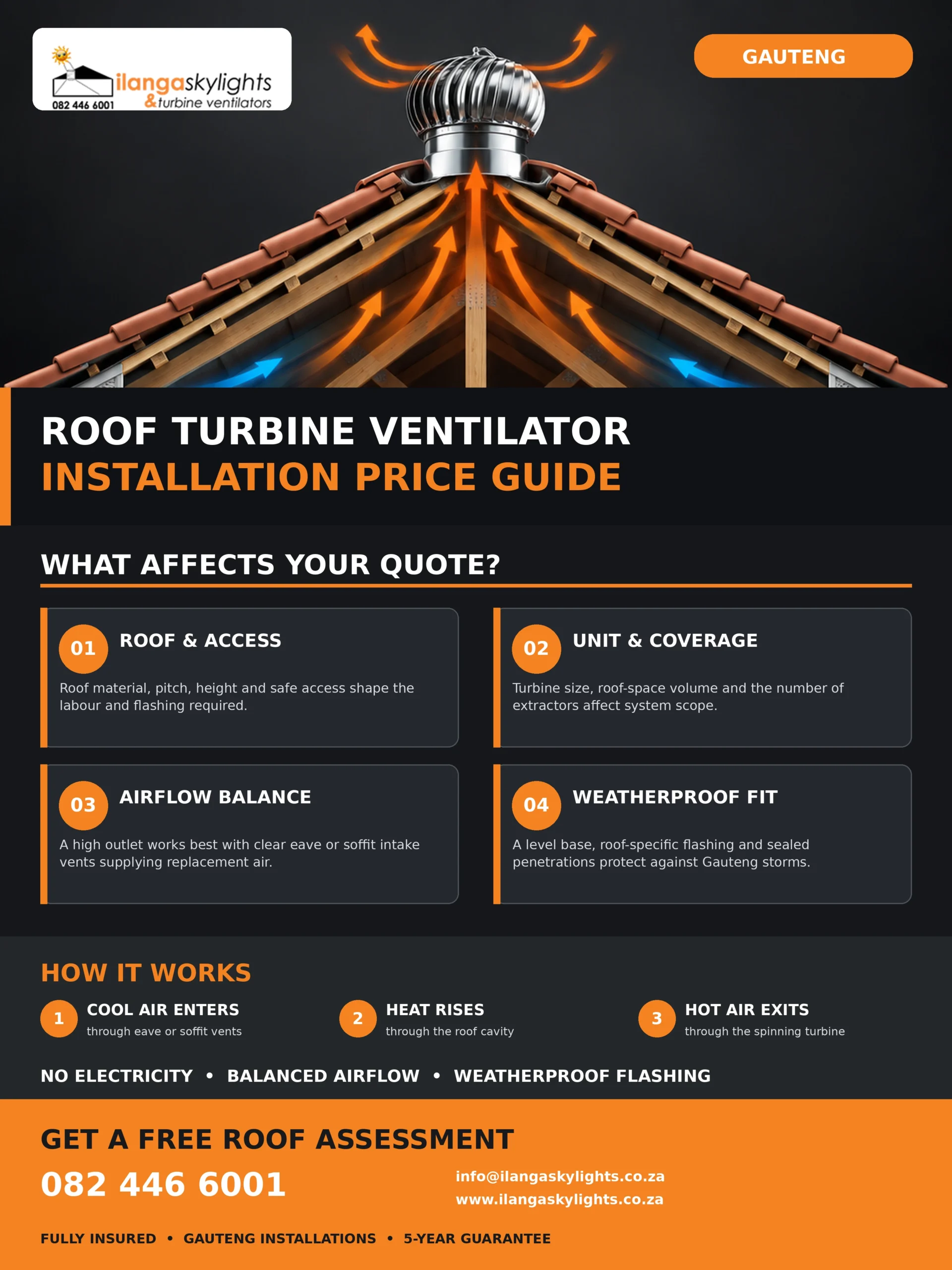
Roof ventilator turbine extractor installation price in Gauteng depends on the turbine size, number of units, roof material, pitch, access and flashing work required, so a roof inspection provides the only reliable quotation. Ilanga Skylights & Roof Turbine Ventilators installs wind-driven extractors on tiled, IBR and other compatible roofs for homes, workshops, warehouses and commercial buildings across the province, without publishing misleading one-price-fits-all figures.
Table of Contents
- Key Takeaways
- What Determines Installation Price
- How a Turbine Extractor Moves Air
- Roof Types and Installation Requirements
- Turbine Extractor Comparison
- What a Gauteng Site Assessment Covers
- Frequently Asked Questions
Key Takeaways: Roof ventilator turbine extractor installation price in Gauteng
| Operational Goal | Mechanism and Structural Benefit |
|---|---|
| Remove trapped roof-space heat | Wind and rising warm air rotate the turbine and support continuous extraction without an electric motor. |
| Control installation scope | Roof volume, turbine capacity, roof covering and access determine unit quantity and labour. |
| Maintain balanced airflow | Eave or soffit intake openings replace the air discharged at the high-level outlet. |
| Protect the roof penetration | Correct flashing, a level base and compatible sealants reduce the risk of stormwater entry. |
| Extend roof-system service life | Reduced heat and moisture accumulation can protect insulation, stored goods and roof components. |
What Determines Roof ventilator turbine extractor installation price in Gauteng?
The roof decides much of the work. Concrete or clay tiles require careful lifting, cutting and shaped flashing. IBR and other metal profiles need a compatible base that follows the roof sheet and seals every penetration. A steep pitch, fragile covering, high eaves or restricted access can add safety equipment and labour to the job.
Capacity matters too. An installer must assess roof-space volume, heat load, existing intake ventilation and the extractor’s rated throat size before recommending a unit count. A small home, a hot workshop and a broad warehouse do not share the same ventilation requirement. Ilanga’s turbine roof ventilator installation service starts with these measurements rather than a guess.
Main cost variables for roof ventilator turbine extractor installation price in Gauteng
- Roof construction: Tile profile, sheet type, pitch and underlay determine how the opening, flashing and weather seal must be formed.
- Extractor specification: Throat diameter, bearing quality, corrosion resistance and required unit quantity shape the equipment scope.
- Site access: Building height, safe ladder position, roof condition and nearby obstructions affect installation time and safety controls.
- Air-intake provision: Extra eave, soffit or low-level vents may be needed when the roof cavity lacks a clear replacement-air path.
How Roof ventilator turbine extractor installation price in Gauteng relates to airflow
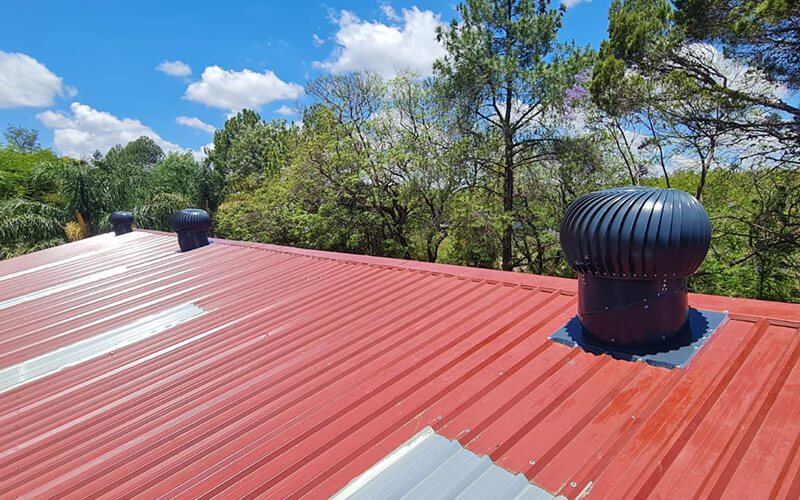
A turbine ventilator uses two natural forces. Wind turns the external vanes and creates suction at the outlet, while warmer air inside the roof cavity rises towards the high point. The spinning head helps discharge this air. Cooler replacement air must enter through lower openings, or extraction will weaken. This is a form of wind-assisted passive ventilation, although moving bearings distinguish the turbine from a fixed vent.
Why intake ventilation affects performance
- A turbine cannot discharge its intended air volume from a tightly sealed cavity because the outgoing air needs an equal replacement path. Clear low-level intake openings support steadier circulation, reduce negative pressure and help the extractor remove heat and moisture from the full roof space.
The guide to how a roof turbine ventilator works explains why a correctly sized system performs better than fitting units by roof area alone.
Roof types and roof ventilator turbine extractor installation price in Gauteng
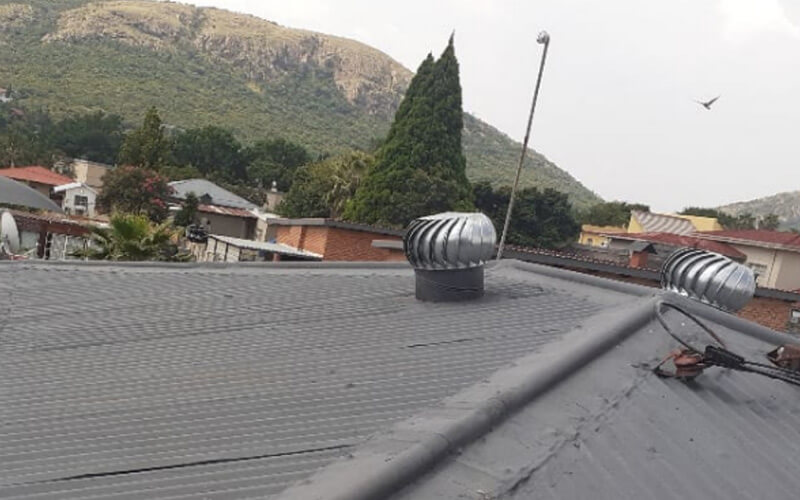
On tiled roofs, the installer positions the unit high on the slope, checks rafters or trusses below, cuts a clear opening and forms flashing that drains over lower tiles. The base must sit level so the turbine turns freely and does not load its bearings unevenly. Ilanga’s established whirlybird vent installation in Gauteng process covers these roof-specific checks.
Metal roofs need a profile-compatible flashing base, corrosion-resistant fasteners and sealing washers. The installer must avoid valleys, gutters and positions where wind turbulence from walls or taller roof sections can reduce performance. Gauteng’s summer thunderstorms make water-shedding details critical, from Pretoria near the Union Buildings to Johannesburg properties around Constitution Hill and Nelson Mandela Square.
Installation details that protect performance
- The opening must remain clear of structural members, electrical cables and plumbing. The base must align with the roof pitch, sit level at the rotating head and direct rainwater over the roof covering without creating a backfall or exposed edge.
- Installers must select sealants and fasteners that suit the roof material. General-purpose sealant cannot replace properly formed flashing, especially on exposed roofs across Gauteng’s high-altitude climate.
Roof ventilator turbine extractor installation price in Gauteng comparison
| Ventilation Option | Power Source | Best Application | Key Installation Requirement |
|---|---|---|---|
| Wind-driven turbine | Wind and rising warm air | Homes, workshops and general roof spaces | Balanced low-level intake and level flashing base |
| Fixed roof vent | Natural buoyancy and pressure difference | Simple background ventilation | Sufficient free vent area and weather protection |
| Powered roof extractor | Electric motor | Controlled high heat or process loads | Electrical supply, controls and rated airflow design |
The turbine suits owners who want continuous roof-space extraction without electrical consumption. A whirlybird roof ventilator system still needs periodic visual checks for debris, storm damage, unusual noise and free rotation. Product quality matters because balanced vanes and sealed bearings support quieter operation and longer service.
Comparing roof ventilator turbine extractor installation price in Gauteng means comparing the full specification, not the turbine head alone. A lower scope may exclude intake vents, difficult access, roof repairs or the flashing details needed for a durable installation.
Ilanga also installs the Windmaster Tornado ventilator where its product specification suits the roof and airflow requirement. Brand selection should follow the site assessment, not replace it.
Site assessment for roof ventilator turbine extractor installation price in Gauteng
A proper quotation records the building use, roof dimensions, roof-space volume, insulation, ceiling condition, intake openings, prevailing obstructions and safe access. The assessor should also identify moisture staining, damaged underlay, loose tiles or corroded sheets that need attention before an extractor is fitted. These checks separate ventilation work from unrelated roof repairs.
Accurate roof ventilator turbine extractor installation price in Gauteng follows this measured scope. It should never rely on a generic unit rate that ignores roof condition or airflow balance.
Property owners should request a written scope that identifies the product, quantity, installation positions, flashing method and any intake vents. Ilanga Skylights & Roof Turbine Ventilators provides site-based recommendations across Johannesburg, Pretoria, Centurion, Midrand and the wider province. Book a roof assessment through Ilanga Skylights and Roof Turbine Ventilators in Gauteng.
What to confirm before accepting a quotation
- Confirm that the proposed unit count follows roof-space volume and intake capacity. Check that the scope names the flashing system, sealing method, warranty terms, access requirements and treatment of any existing roof defects before work starts.
Frequently Asked Questions
Can roof ventilator turbine extractor installation price in Gauteng be quoted without a site visit?
An installer can discuss likely scope from photographs and roof measurements, but a final quotation should follow an inspection. Roof pitch, access, intake ventilation and the condition beneath the covering can change the work required.
Does a turbine roof extractor need electricity?
No. Wind rotates the turbine, while rising warm air supports natural movement through the outlet. Performance still depends on wind exposure, correct placement and adequate replacement-air openings.
How many roof turbine ventilators does a Gauteng property need?
The number depends on roof-space volume, heat and moisture load, turbine capacity and available intake area. Floor area alone does not provide a reliable answer.
Can a turbine extractor leak during heavy rain?
A correctly installed turbine uses a weatherproof head and roof-specific flashing to shed water. Leaks usually relate to poor flashing, failed sealant, an uneven base or damage around the roof penetration.
Will a turbine extractor cool the rooms below?
It removes heat stored in the roof cavity and can reduce heat transfer towards the ceiling. It is not an air conditioner, and the indoor result depends on insulation, ceiling construction, external temperature and total airflow.