What Is the Use of a Roof Turbine Ventilator?
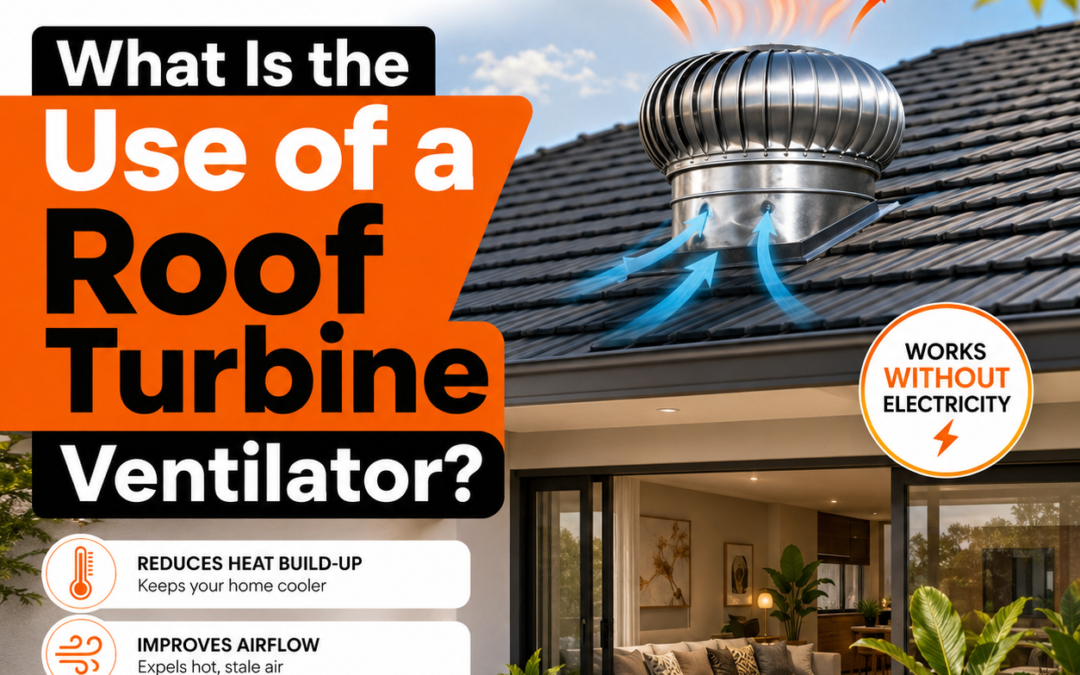
A roof turbine ventilator pulls hot, stale air and built-up moisture out of a roof cavity using nothing but wind, protecting the roof structure, easing the load on air conditioning, and stopping timber and insulation from rotting in the damp. Ilanga Skylights & Roof Turbine Ventilators has spent over two decades fitting these units on homes across Gauteng, and the short version is this: a roof turbine ventilator keeps a roof cooler, drier and longer lasting, all without drawing a single watt of electricity.
Key Takeaways
- A roof turbine ventilator uses wind power alone to extract hot air and moisture from a roof cavity, drawing no electricity.
- Ceiling temperatures often drop noticeably once a roof turbine ventilator is fitted, easing pressure on aircon units.
- Whirlybird, Windmaster Tornado and turbo ventilator designs each suit different roof types and wind conditions.
- A roof turbine ventilator keeps working during power outages, since it has no motor or wiring to fail.
- Ilanga Skylights & Roof Turbine Ventilators backs every installation with a 5-year workmanship and materials guarantee.
- Correct sizing and positioning matter more than brand, since an undersized unit will underperform regardless of make.
How Does a Roof Turbine Ventilator Work?
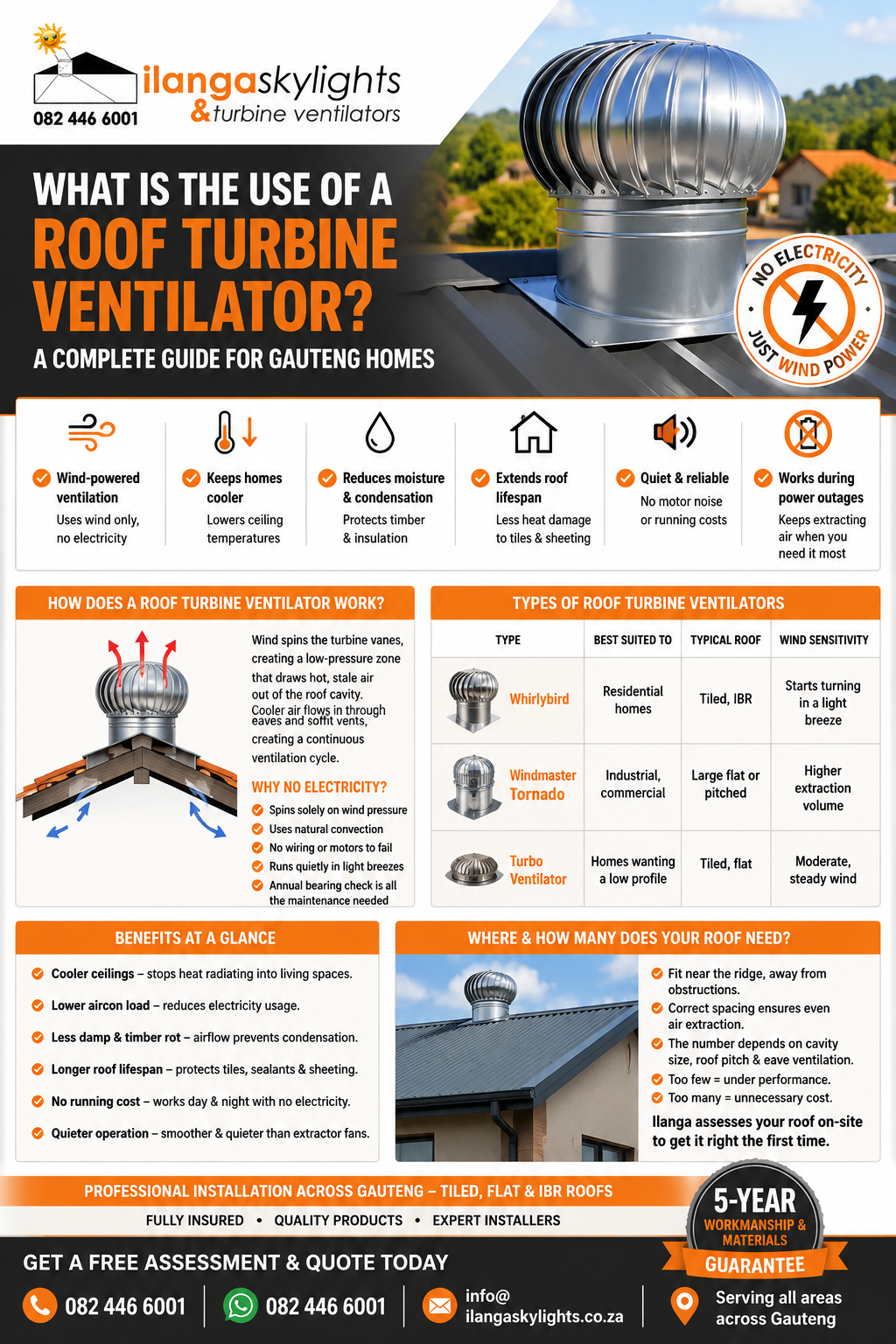
A roof turbine ventilator sits at the highest point of a roof and spins whenever wind passes over its vanes. That spin creates a low-pressure zone inside the dome, drawing hot air upward and out of the roof cavity through a base flashing sealed into the sheeting or tiles below. As warm air leaves, cooler air is drawn in through eaves and soffit vents, keeping a steady cycle moving through the roof space. This process is a form of passive ventilation, meaning no fan motor, no wiring, and nothing electrical to fail. A roof turbine ventilator keeps turning in the gentlest breeze, with most models starting to rotate in wind speeds as low as 3 to 5 km/h.
Why a Roof Turbine Ventilator Needs No Electricity
- Spins purely on wind pressure moving across its vanes.
- Uses natural convection to pull hot air upward and out of the cavity.
- Keeps extracting air during power outages, unlike electric extractor fans.
- Requires no wiring or switch, just an annual bearing check.
Why Gauteng Homes Rely on a Roof Turbine Ventilator
Gauteng’s climate makes a roof turbine ventilator genuinely useful rather than optional. Summers push ceiling cavity temperatures well past outdoor readings, especially under IBR sheeting and dark roof tiles, and highveld thunderstorms trap moisture that has nowhere to escape without proper airflow. Homeowners from Kyalami down to Fourways, and from the farmlands around Irene through to the suburbs near OR Tambo International Airport, all sit under the same highveld sun, and a roof turbine ventilator does the same job whether the roof is tiled, flat or IBR. Gauteng is South Africa’s most densely built-up province, so roof cavities heat up fast in suburbs with less tree cover, and a properly sized roof turbine ventilator brings that heat back down without adding a single rand to a household’s electricity bill.
Ilanga Skylights & Roof Turbine Ventilators has fitted turbine units on everything from double-storey homes to warehouse roofs, including a steady stream of skylight and roof turbine ventilator installations in Centurion, where dense residential estates and limited tree cover make roof cavity heat a common complaint.
Types of Roof Turbine Ventilators
Three roof turbine ventilator styles cover most Gauteng homes. The whirlybird roof ventilator is the classic dome-shaped, multi-vane design most homeowners picture first, while a Windmaster Tornado ventilator installation suits larger industrial and commercial roofs that need higher extraction volumes. For homes wanting a lower-profile finish, a standard turbo ventilator installation works well on tiled and IBR roofs without altering the roofline.
| Roof Turbine Ventilator Type | Best Suited To | Typical Roof | Wind Sensitivity |
|---|---|---|---|
| Whirlybird | Residential homes | Tiled, IBR | Starts turning in a light breeze |
| Windmaster Tornado | Industrial, commercial | Large flat or pitched | Higher extraction volume |
| Turbo Ventilator | Homes wanting a low profile | Tiled, flat | Moderate, steady wind |
Benefits of Fitting a Roof Turbine Ventilator
- Cooler ceilings: extracting trapped heat before it radiates down into living spaces.
- Lower aircon load: a cooler roof cavity means air conditioning units cycle less often.
- Less damp and timber rot: continuous airflow stops condensation building up on rafters and battens.
- Longer roof lifespan: reduced heat cycling protects tiles, sealants and roof sheeting over time.
- No running cost: a roof turbine ventilator draws no electricity, so it keeps working during power outages.
- Quieter operation: wind-driven rotation runs far more quietly than an electric extractor fan.
Where and How Many Roof Turbine Ventilators a Roof Needs
Positioning matters more than most homeowners expect. A roof turbine ventilator performs best fitted close to the ridge, away from obstructions that block airflow around the dome, and ideally spaced to draw evenly from the whole roof cavity rather than clustering in one corner. The number of units a roof needs depends on cavity volume, roof pitch and existing eave ventilation, which is why Ilanga Skylights & Roof Turbine Ventilators assesses roof turbine ventilator installation requirements on site rather than applying a fixed formula to every home. Fitting too few units leaves the cavity under-ventilated, while crowding several units onto a small roof adds cost without adding extraction benefit.
For homes with existing skylights, pairing a roof turbine ventilator with proper eave or soffit vents gives the best result, since the ventilator has cooler replacement air to draw in rather than recirculating heat that has nowhere else to go.
Homeowners ready to move forward can reach Ilanga Skylights & Roof Turbine Ventilators for an on-site assessment covering pitched, flat, tiled and IBR roofs across Gauteng, with every installation completed by a fully insured team and backed by a 5-year workmanship and materials guarantee.
Frequently Asked Questions
Does a roof turbine ventilator work without wind?
A roof turbine ventilator needs some air movement to rotate, but it starts turning in very light breezes, often as low as 3 to 5 km/h. On genuinely still days it slows down, though the stack effect from rising warm air still provides a degree of passive airflow even then.
How long does a roof turbine ventilator last?
Ilanga Skylights & Roof Turbine Ventilators backs every unit with a 5-year workmanship and materials guarantee, and a well-maintained roof turbine ventilator commonly keeps performing for many years beyond that with a simple annual bearing check and visual inspection.
Can a roof turbine ventilator replace ceiling insulation?
No. A roof turbine ventilator removes hot air from the roof cavity above the ceiling, while insulation slows heat transfer through the ceiling itself. The two work together, and most Gauteng homes see the best results when both are addressed rather than relying on one alone.
Is a roof turbine ventilator noisy?
A correctly installed roof turbine ventilator runs quietly, since the bearings carry the load rather than a motor. Any grinding or squeaking noise usually points to a bearing needing attention rather than a normal part of operation.
Does a roof turbine ventilator help during power outages?
Yes. Since a roof turbine ventilator runs entirely on wind power rather than electricity, it keeps extracting hot air and moisture from the roof cavity during power outages, when electric extractor fans and air conditioning units stop working altogether.