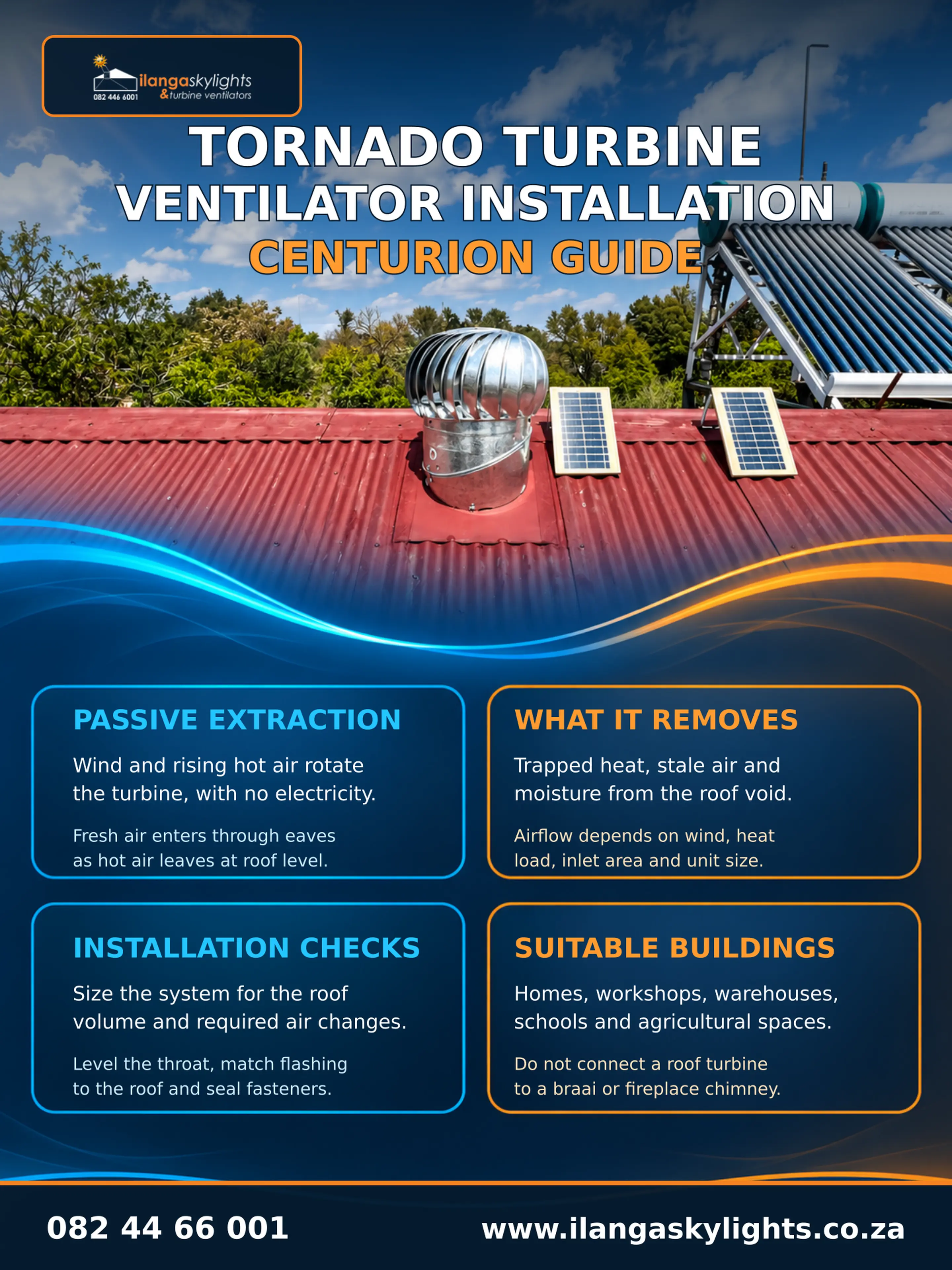
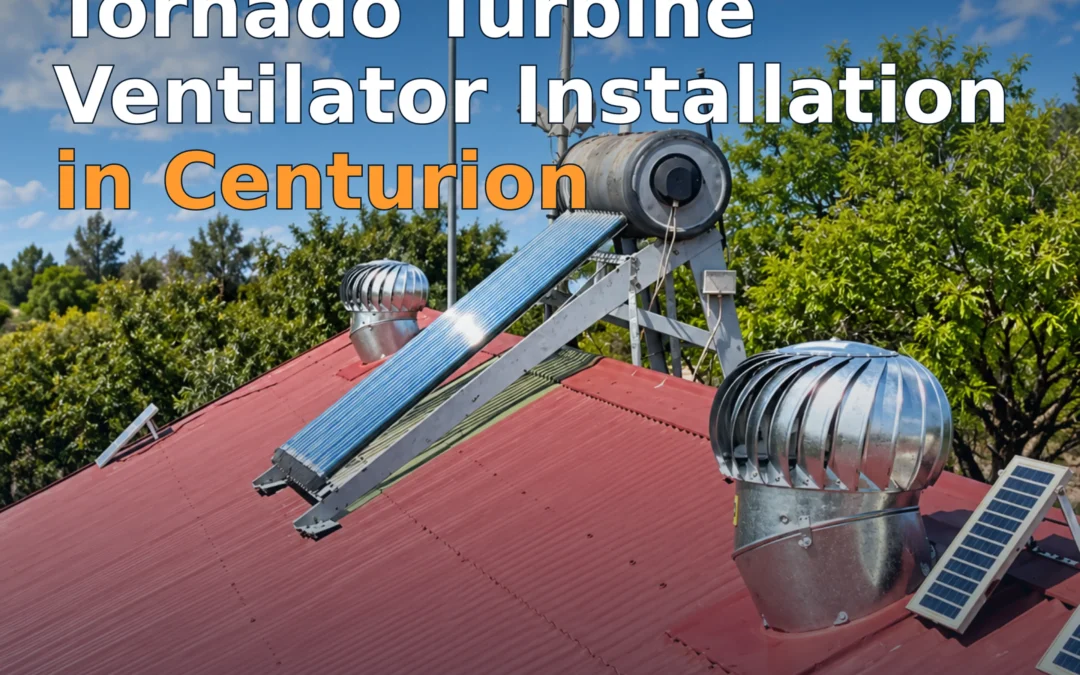
Tornado Turbine Ventilator Installation in Centurion
Tornado Turbine Ventilator Installation in Centurion removes trapped roof heat and stale air through wind-assisted, passive extraction, and Ilanga Skylights & Roof Turbine Ventilators installs these systems on compatible residential and commercial roofs. The correct unit size, intake area, flashing detail and position determine whether the turbine produces useful airflow without compromising the roof.
Table of Contents
- Key Takeaways
- Planning and Roof Assessment
- How Passive Extraction Works
- Sizing and Air Changes
- Installation and Weatherproofing
- System Comparison
- Maintenance and Performance Checks
- Frequently Asked Questions
Key Takeaways: Tornado Turbine Ventilator Installation in Centurion
| Operational Goal | Mechanism and Structural Benefit |
|---|---|
| Extract accumulated heat | Wind and rising warm air turn the turbine and draw hot air from the highest part of the roof void. |
| Maintain replacement airflow | Eaves, soffit or purpose-made intake vents admit outside air as the turbine discharges warmer stale air. |
| Protect the roof penetration | A level throat, roof-profile flashing, sealed fasteners and correct laps direct rainwater around the opening. |
| Match capacity to the building | Roof-space volume, heat load, use and target air changes determine the required unit size and quantity. |
| Avoid powered running costs | The turbine uses natural convection and wind assistance rather than an electric extraction motor. |
Planning Tornado Turbine Ventilator Installation in Centurion
A roof assessment must identify the roof covering, pitch, structural members, available intake vents, heat sources and safe access before cutting begins. Properties near Centurion Mall, SuperSport Park and Irene Farm include tiled homes, corrugated roofs, workshops and larger commercial spaces. Each roof requires a different flashing shape and extraction plan.
Tornado Turbine Ventilator Installation in Centurion works best when the unit sits high on the roof and clear of sheltered pockets that restrict wind exposure. The opening must avoid ridges, valleys, gutters and structural members. Ilanga Skylights provides professional skylight and roof ventilation services and assesses whether one or several extraction points will distribute airflow more evenly.
Property owners can review the broader turbine roof ventilator range and applications before selecting a system. The assessment must still confirm the final unit type because floor area alone does not describe the roof-space volume, internal heat load or fresh-air path.
What supports successful Tornado Turbine Ventilator Installation in Centurion?
- Clear exhaust position: The turbine needs exposure to moving air and access to the warmest zone of the roof void. A high, unobstructed location supports extraction, while valleys, parapets and nearby structures can create turbulent or sheltered areas that weaken predictable performance.
- Adequate replacement air: Extraction cannot continue effectively through a sealed roof space. Eaves, soffit or dedicated intake vents must admit outside air without drawing rain, pests or unwanted dust into the building. The intake area should remain open after insulation or ceiling work.
How Tornado Turbine Ventilator Installation in Centurion works
The system combines buoyancy and wind. Warm air rises towards the roof apex, while air moving across the turbine rotates its vanes and creates an extraction path through the throat. This is a form of passive ventilation driven by pressure and temperature differences, so output changes with wind speed, indoor temperature, inlet area and resistance through the roof void.
Tornado Turbine Ventilator Installation in Centurion does not cool air like an air conditioner. It limits heat accumulation by replacing hot, stale roof-space air with cooler outside air. The result can reduce the heat load transferred through ceilings, especially during sunny conditions, but insulation, shading, ceiling sealing and building use still affect indoor comfort.
What the airflow path needs
- Low resistance: Storage, insulation and closed vents can block movement through the roof void. A clear path from intake points to the turbine allows the pressure difference to move air across the space rather than drawing from one small pocket near the roof opening.
- Balanced openings: Several turbines need enough shared intake area. Adding extraction units without checking the inlet path can produce disappointing results, increase air resistance and draw conditioned air through ceiling gaps instead of sweeping the roof void with outside air.
Sizing Tornado Turbine Ventilator Installation in Centurion
Correct sizing starts with internal volume, not a guess based only on roof length. The assessor calculates the ventilated space and selects a target number of air changes per hour for the building use. Workshops, warehouses and heat-producing operations can need more air movement than a domestic roof void. The required airflow is then divided by the tested capacity of the selected turbine model.
Manufacturer data must be read at the stated wind speed because turbine capacity is not fixed under every weather condition. The Windmaster Tornado ventilator installation guide explains the product and site variables that influence selection. Ilanga Skylights also covers the wider purpose and practical use of roof turbine ventilators.
Tornado Turbine Ventilator Installation in Centurion and weatherproofing
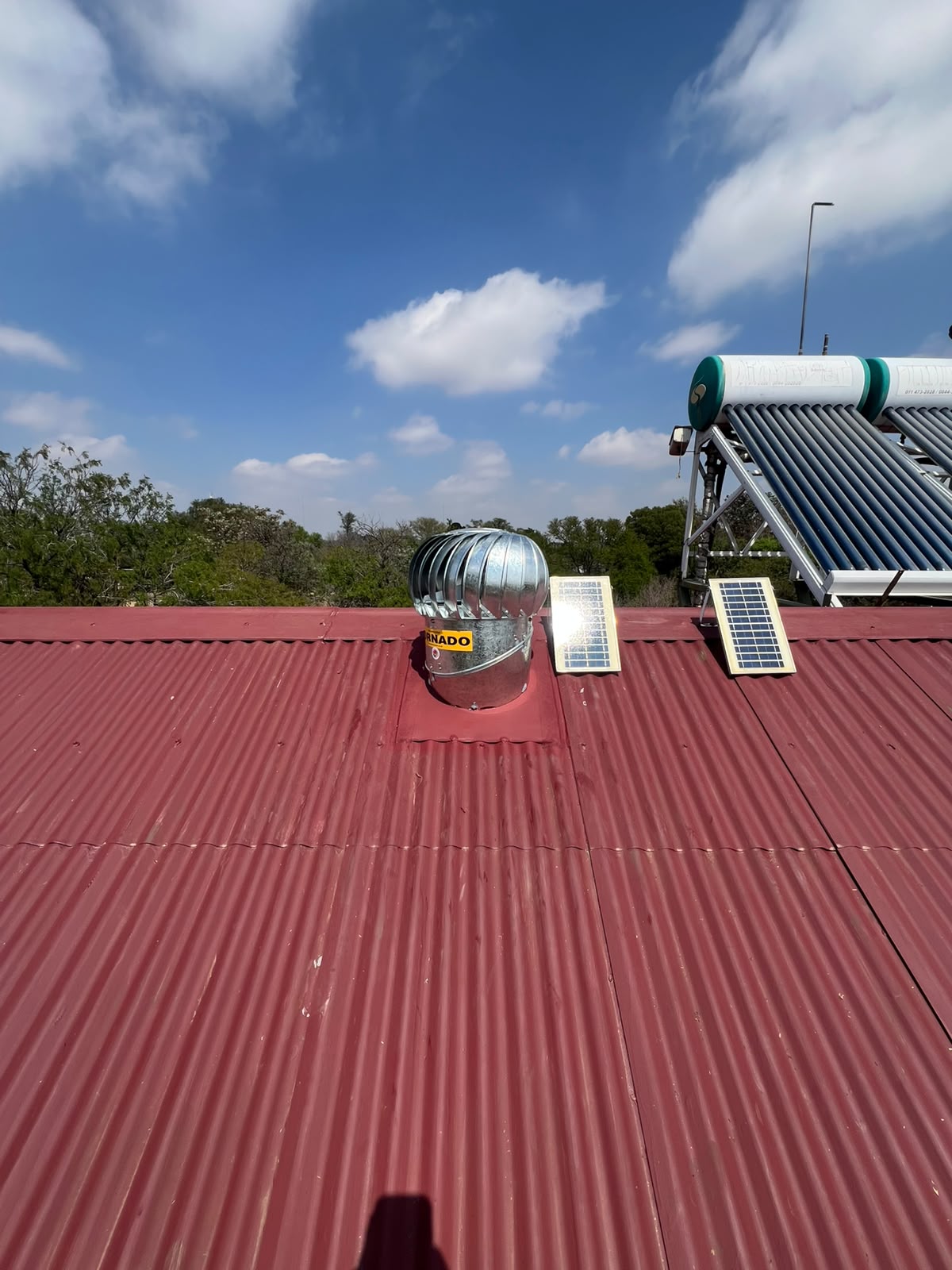
The installer marks the opening, checks the underside for services and structure, cuts the roof sheet or tiles, forms the flashing and levels the turbine throat. A tilted throat can impair rotation and place uneven stress on the bearing assembly. The flashing must follow the roof profile and discharge water onto the covering below.
Sealant supports the flashing detail but does not replace correct laps, fasteners and shaped metalwork. Corrugated and IBR roofs need profile-compatible bases and sealed fasteners. Tiled roofs need flashing that integrates with the tile courses. Summer thunderstorms across Gauteng’s high-altitude inland province make water-shedding detail essential.
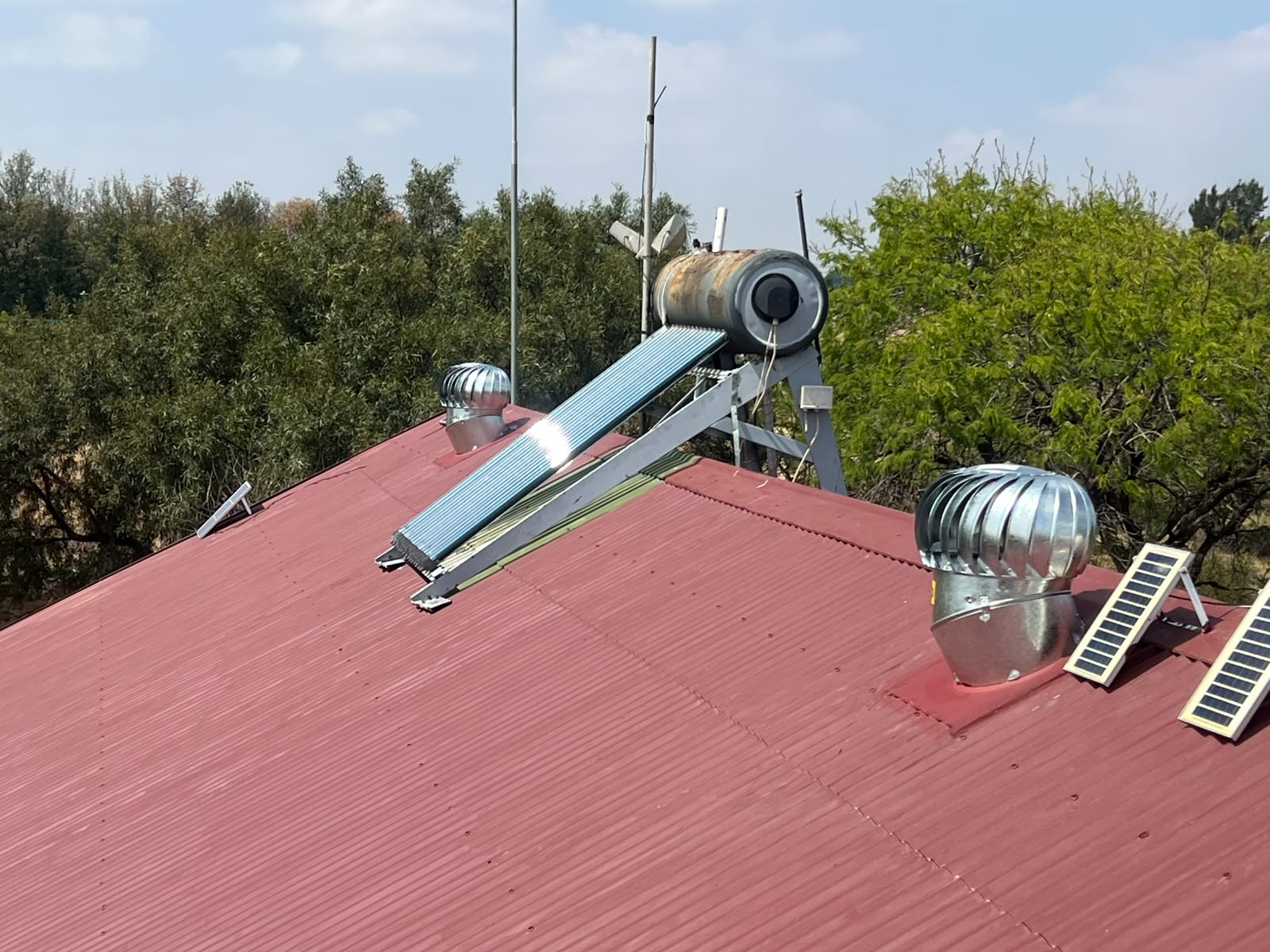
The finished unit should rotate freely without scraping or wobbling. Ilanga Skylights checks the base, throat, fasteners, roof surface and internal opening before handover. The related whirlybird vent installation service across Gauteng describes similar roof preparation and ventilation principles.
Tornado Turbine Ventilator Installation in Centurion comparison
| Ventilation Method | Main Strength | Primary Limitation | Suitable Use |
|---|---|---|---|
| Tornado turbine | Wind-assisted passive extraction with no electrical motor | Output varies with wind, heat and intake conditions | Homes, workshops, warehouses and agricultural buildings |
| Static roof vent | No moving parts and simple high-level outlet | Relies mainly on buoyancy and pressure around the cowl | Supplementary roof-space ventilation |
| Powered extractor | Controlled airflow when correctly specified | Needs electricity, controls and ongoing maintenance | Spaces that require predictable mechanical extraction |
The right choice depends on the heat source, required air changes, available intake area, electrical supply and operating pattern. The guide to whirlybird roof ventilators covers wind-driven options, while the roof ventilator turbine installation scope in Gauteng explains the factors assessed before quotation without relying on a generic price.
Maintaining Tornado Turbine Ventilator Installation in Centurion
A sound turbine should rotate smoothly, remain securely fixed and show no staining around the roof opening. Owners should inspect the flashing after severe storms, roof repairs or nearby solar work. Leaves, insulation and stored items must not block the intake path inside the roof void.
Tornado Turbine Ventilator Installation in Centurion should be assessed if the head stops turning in suitable wind, becomes noisy, wobbles or allows water marks to appear below. The turbine is not a chimney cowl and must not be connected to a braai or fireplace flue. Combustion exhaust needs a system designed and approved for that duty.
Frequently Asked Questions
Does Tornado Turbine Ventilator Installation in Centurion work without electricity?
Yes. The turbine uses wind assistance and rising warm air rather than an electric motor. Airflow still changes with wind speed, temperature difference, intake area and resistance through the roof void.
How many Tornado turbines does a Centurion property need?
The quantity depends on roof-space volume, building use, target air changes, turbine capacity and available intake ventilation. A site assessment should calculate the requirement instead of selecting units from floor area alone.
Can a Tornado turbine be installed on tiled and metal roofs?
Yes, provided the installer uses flashing made for the roof profile and pitch. Tiled, IBR and corrugated roofs require different cutting, fastening and water-shedding details.
Will a roof turbine stop rain entering the building?
The turbine head and correctly formed flashing are intended to shed rain during normal service. Leaks can still develop through poor flashing, loose fasteners, roof damage or incorrect placement near concentrated water paths.
Can a Tornado turbine be fitted to a braai chimney?
No. A standard roof turbine is not designed for direct combustion exhaust from a braai or fireplace. The flue needs a purpose-made cowl and installation suited to high temperature, smoke and fire safety requirements.